

Extend Your micro:bit with Elecfreaks
June 30, 2026
So You’ve Got a 3D Printer–Now What?
June 30, 2026
Theater is the ideal example of STEAM. STEM fields and art are not as separate as many people believe. Art and STEM both require problem-solving skills and iterative design thinking. Theater combines creativity with STEM skills. From Broadway musicals to your school’s annual play, every production relies on engineering, physics, and technology to immerse the audience in the story. Without STEM, these productions would seem lifeless. The set and the special effects help bring the story to life and convince the audience they’re in another time period or a land far, far away.
Set Design and Engineering
Designing sets is like solving a long series of small problems. Each problem requires set designers to think like an engineer. Using the Engineering Design Process, these designers plan, build, test, and improve every set piece. Most of these set pieces need to look realistic and convince the audience they’re in another world. At the same time, each piece must be sturdy and able to move on and off the stage depending on the scene. Each piece of the set has to be carefully measured, and the materials need to fit into the budget. These designers have to use math and geometry to calculate the exact dimensions of each piece. Bringing the design to life involves hands-on work, cutting and painting each piece. The entire process uses STEM problem-solving, even if most people wouldn’t think that designing a set involves STEM.
Physics and Special Effects
The magic of theaters relies on physics and motion. Special effects elevate the experience of watching a play or musical in a theater. Just like the sets, these special effects require STEM thinking to create that magic. In the musical Wicked, a character, Elphaba, flies across the stage on a broomstick. Behind the scenes, the actress is wearing a harness that connects her to a pulley to suspend her in the air safely. To execute this safely, engineers need to understand physics and carefully time each movement with the music and/or dialogue. Smaller productions use moving sets and fog machines to excite and engage the audience. All of these special effects require STEM problem-solving and collaboration.
Lighting and Sound Technology
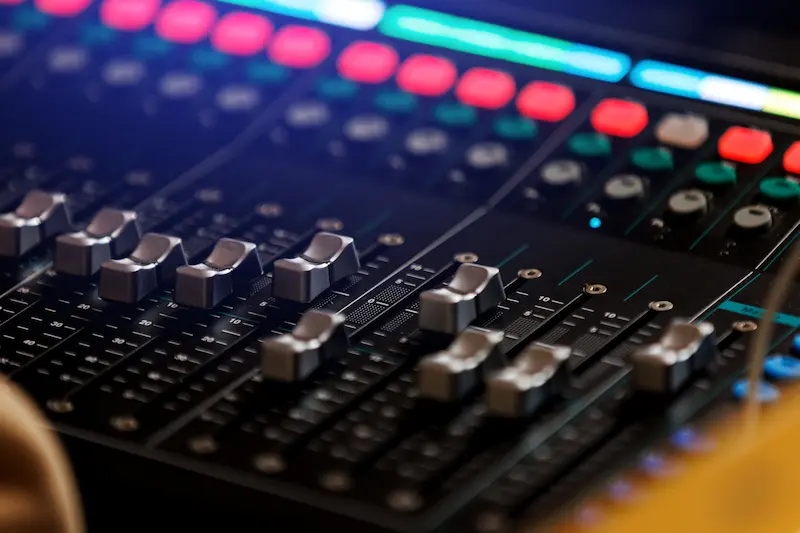
Without lighting and sound technology, no one in the audience could see or hear the performers. Theater is a mix of art and technology. For example, lighting technicians have to carefully plan out when lights turn on and where they should point. Many lighting setups are actually coded, so someone just needs to press a button to begin a complex sequence of lights flashing at the exact right time.
Sound engineers are responsible for making sure the music, dialogue, and sound effects during a production are high-quality and perfectly timed. For this job, they program a soundboard with all the needed background music and effects for the show. During the performance, sound technicians carefully adjust the volume and pitch of the actors’ microphones to ensure that every word and note can be heard throughout the theater.
Why STEAM Education Matters
STEM and art are more connected than many people believe. Many creative fields require technology, math, and engineering skills. Similarly, many STEM projects require artistic creativity to design an effective solution to a problem. There are many STEM jobs in creative fields that students are not exposed to through typical STEM education. Theater is a great example of how creativity and problem-solving work together to create an entertaining product. Creative students have a place in STEM, even if their interests don’t align with typical programming and engineering careers.
Read more deep dives from STEM to Stern at the links below.




STEM Education Works is dedicated to providing cost-effective and user-friendly access to top-notch STEM curricula and technologies, driven by our mission to transform students’ lives. Learn more about what we do through our socials, Facebook, Twitter, Youtube, LinkedIn, Instagram, and TikTok.