

So You’ve Got a 3D Printer–Now What?
June 30, 2026
What STEM-related breakthroughs would you like to see happen within your lifetime?
July 6, 2026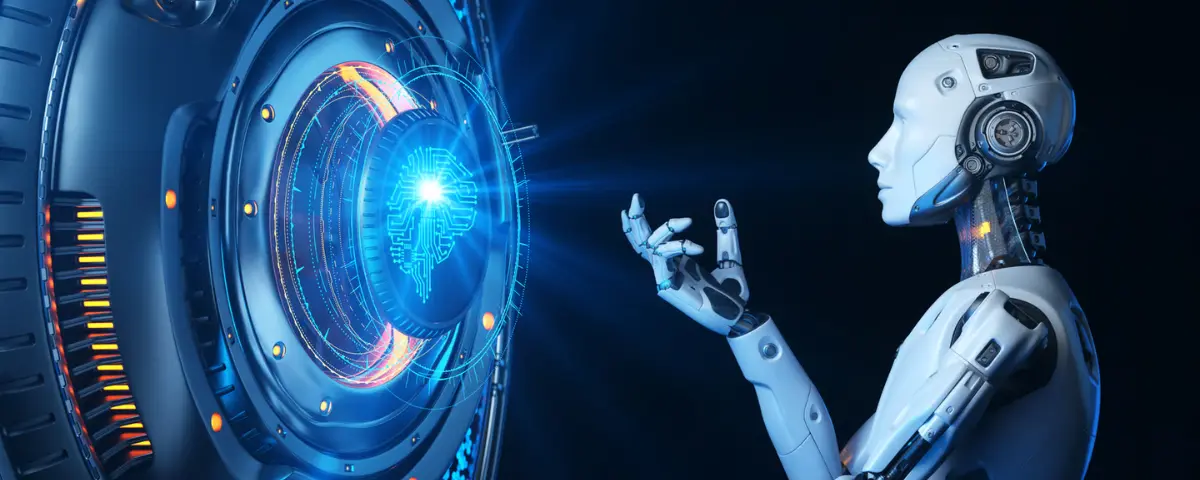
Artificial intelligence (AI) continues to improve. AI can already recognize images, answer questions, and generate content, but does that mean it’s becoming conscious? As AI becomes more advanced, how do we ensure that new technology doesn’t leave people behind? Every innovation requires ethical considerations to ensure technology benefits society. After all, no one wants our world to become a science fiction story where robots take control.
Could AI Ever Become as Intelligent as Humans?
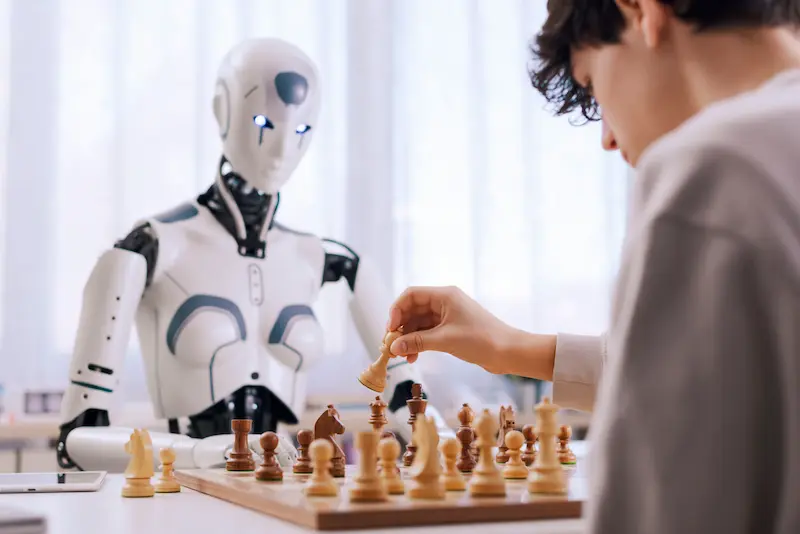
AI doesn’t learn on its own. Instead, it’s trained using information from humans. While AI can access a vast amount of information, it struggles to evaluate the information it receives. While humans are taught to evaluate the source of information, AI just absorbs all information, meaning that it can provide incorrect information or fabricated (“hallucinated”) sources.
Humans created computers and AI to handle complex calculations and process large amounts of data. As such, computers excel at linear processing, handling information and solving problems one step at a time. When you type a string of code or prompt an AI, the computer processes the information until it reaches an answer. Humans are better at parallel processing, meaning we process multiple streams of information simultaneously. This makes our brains better at solving problems and being creative. As AI is trained on more information, it knows more, but computers still process information differently from humans, whose creativity, reasoning, and emotional intelligence allow us to solve problems in unique ways.
Can AI Ever Understand Human Emotions?
AI also struggles to understand emotions. Humans have empathy for others, meaning that we can imagine how another person is feeling and relate those emotions to our own experiences. AI can recognize emotions, but it cannot experience them. Because AI has never experienced happiness or sadness, it cannot empathize with those emotions. Even if AI becomes better at replicating emotions, genuine empathy and lived experiences are much more difficult to replicate. We understand the world around us by experiencing it, but AI only knows about the world based on how humans describe it. This means that one of the biggest advantages of humanity over AI is our emotional intelligence. This understanding helps us communicate with other people and empathize with their feelings.
If AI Became Conscious, Should It Have Rights?
If AI improved to the point where it could understand emotions and become self-aware, what would humanity do? There’s a large amount of science fiction media that explores this idea, from robots taking over the world to peacefully living alongside humanity. Should a conscious AI deserve legal rights or protections? If so, should those protections be the same as for humans? Although scientists continue to debate whether AI could ever become conscious, the possibility raises concerns about how society should advance technology ethically.
How Can We Build Ethical AI?
Ethics are an important part of creating any technology, especially technology that could replace human thinking. AI has the potential to replace jobs, leaving many people without a source of income. At the same time, AI is prone to mistakes because it lacks critical thinking and human judgement, so companies that use AI irresponsibly or unethically could face severe consequences. As programmers continue to improve AI, it’s their responsibility to design AI that benefits people while minimizing economic harm. Similarly, it’s the users’ responsibility to ensure that they are using AI ethically. Ultimately, ethics need to be considered before technologies are developed and revisited as the technology continues to evolve.
The Future of AI
AI continues to evolve, but many questions about its future remain unanswered. The future of AI depends on the people who design, regulate, and use it responsibly. It’s crucial that students develop critical thinking and digital literacy skills to understand what makes humans unique and evaluate the ethical challenges surrounding intelligent machines.
Read more deep dives from STEM to Stern at the links below.



STEM Education Works is dedicated to providing cost-effective and user-friendly access to top-notch STEM curricula and technologies, driven by our mission to transform students’ lives. Learn more about what we do through our socials, Facebook, Twitter, Youtube, LinkedIn, Instagram, and TikTok.