

What is gravity?
May 12, 2026
Think Like a Coder: Fun Ways to Bring Computational Thinking into Any Classroom
June 1, 2026
STEMgineer’s Guide to Problem Solving Workbooks
Everyday Ways We Experience Time Travel
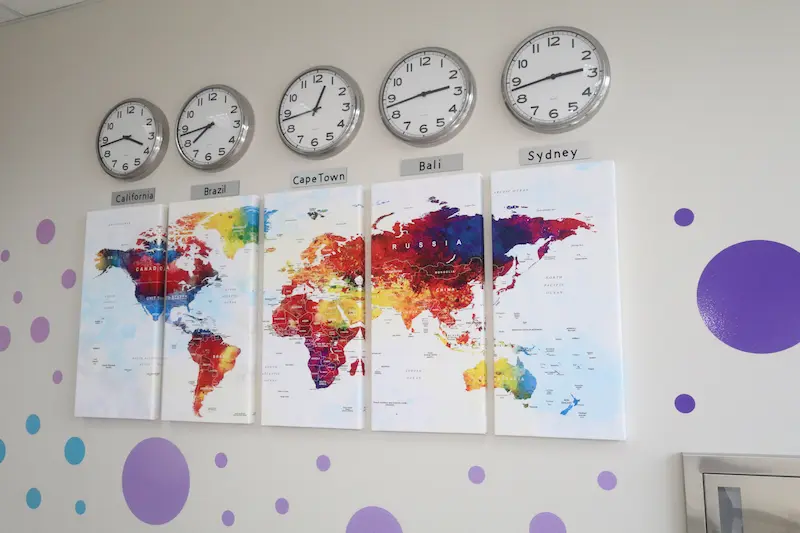
If you’ve ever flown or taken a long road trip, you’ve likely crossed time zones. By crossing time zones, the time technically changes, so you’re an hour ahead or an hour behind. Since the sun sets at different times around the world, our planet is divided into different international time zones. In the United States, there are six time zones: four for the continental United States and two for Hawaii and Alaska. Just by flying across the country, you’re technically time-traveling. For example, if you get on a plane in New York and fly to Los Angeles, you will be on the plane for six hours, but when you land, it will only be three hours after you got on the plane since the Pacific Time Zone (where Los Angeles is) is three hours behind the Eastern Time Zone (where New York City is).
Similarly, sleep can be considered a form of time travel, since you wake up with no memory of what occurred while you were asleep. When you wake up, your brain is in the same place as when you went to sleep, but the time is actually eight hours later. Since we sleep every day, we don’t consider the possibility that we’re traveling through time.
Time Travel in Movies and Comics
When you think of time travel, your mind probably goes to popular movies like Back to the Future and Meet the Robinsons, where the main characters time-travel. In Back to the Future, the main character travels back in time to when his parents were teenagers. By interfering in his parents’ lives, he threatens his own existence because if his parents don’t end up together, he will never be born. This idea is known as the grandfather paradox. Essentially, if you prevent your grandfather and grandmother from having children, your parents would never have you, and there would be no one to time-travel in the first place.
To avoid this paradox, science fiction creators use alternate timelines to explain how a time traveler can visit the past without influencing their current reality. The Marvel Cinematic Universe uses this concept in multiple movies. When a character travels back in time, they create an alternate universe similar to but separate from the one they came from. The more times that the character travels back in time, the more alternate universes they create. While this removes the problem of the grandfather paradox, it does make the entire idea of time travel much more complex.
The Real Science Behind Time Travel
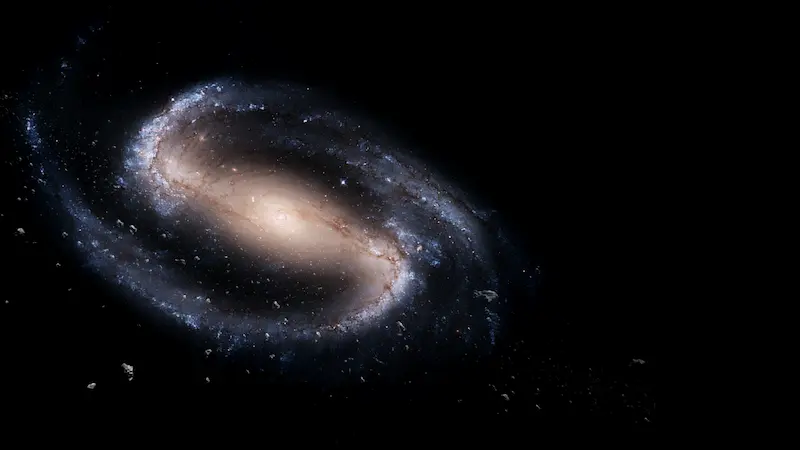
In space, time travel is actually possible, and it doesn’t require a DeLorean. Time travel is only possible in space due to Einstein’s theory of relativity. Because there are no time zones or sunsets in space, there’s no way to truly measure time, so Einstein theorized that time is relative and the speed of light is the only constant. That’s why distance in space is sometimes referred to as light-years. According to NASA, the Hubble Space Telescope can observe events that occurred hundreds to millions of years ago because they are so far away that the light from them is just now reaching the telescope.
Other space phenomena, like black holes or wormholes, could make time travel possible. Basically, these forces would be so strong that they could bend light’s path and therefore, bend time itself. A wormhole is essentially a tunnel through space that can bend the fabric of space-time to the extent that you could move through space faster than the speed of light, meaning you would be time-traveling. This idea is purely theoretical, though, because scientists have never been able to observe a wormhole, and even if they found one, humans likely couldn’t survive the force of traveling faster than the speed of light.
Using Time Travel to Explore STEM Thinking
Time travel is more than a science fiction idea. It is a fun way for students to explore real-world STEM concepts such as physics, space, and motion. Movies and comics about time travel encourage students to ask big questions about how time travel could work. STEM starts with curiosity, and questions about time travel encourage students to keep exploring ideas and thinking about how science shapes the world around them.
Read more deep dives from STEM to Stern at the links below.

STEM Education Works is dedicated to providing cost-effective and user-friendly access to top-notch STEM curricula and technologies, driven by our mission to transform students’ lives. Learn more about what we do through our socials, Facebook, Twitter, Youtube, LinkedIn, Instagram, and TikTok.