


micro:bit – Small, but Mighty!
June 8, 2026
Which comic book character would smell the worst? Exploring the science of smell in comic book characters.
June 8, 2026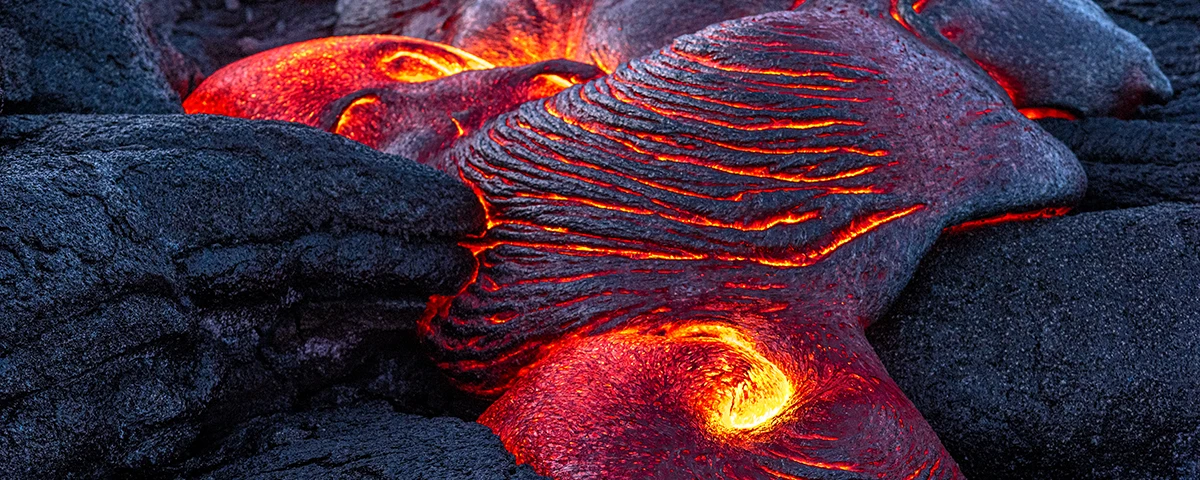
STEMgineer’s Guide to Problem Solving Workbooks
Volcanoes are among the most fascinating features of the natural world. Giant mountains that sprout up from the ground and can erupt with molten liquid always spark curiosity in young learners. Volcanoes form all around Earth, particularly along tectonic plate boundaries, but volcanic eruptions are rare. When they do erupt, they can release lava, volcanic gases, and other materials.
What is Lava?
Lava erupts from volcanoes, but where does it come from? Under the Earth’s crust, there is a layer of molten rock called magma. The pressure of the magma trying to escape from cracks in Earth’s surface forms volcanoes. This means that before erupting, all volcanoes are full of magma. When the magma reaches the Earth’s surface, it becomes lava. This distinction may seem minor, but lots of scientific terminology functions similarly. For example, we call meteors and meteorites “shooting stars”, but meteors actually burn up in the atmosphere while meteorites actually make contact with Earth’s surface.
Why do Volcanoes Erupt?
There are actually three different types of volcanoes, and only one erupts frequently. According to the U.S. Geological Survey, active volcanoes have erupted in the last 12,000 years. Dormant volcanoes have not erupted in a long time, but there is evidence that the magma beneath them is still active. Extinct volcanoes have not erupted in a long time and show little to no signs of magma movement.
Active volcanoes erupt due to intense pressure and heat underneath the Earth’s surface. Most of this heat escapes through the gaps in tectonic plates, but if the plates shift and the heat can no longer escape, it often leads to an eruption. Most of the world’s active volcanoes are in the Pacific Ocean around Hawaii, Japan, and Indonesia. This area is where some of the largest tectonic plates meet, and the pressure of those huge parts of Earth’s crust pushing against each other can lead to volcanic eruptions.
What Happens When Lava Cools?
As soon as magma leaves the volcano and becomes lava, it cools rapidly. Lava can travel quickly down the side of a volcano, depending on the viscosity. As it cools, it turns from a flowing orange/red liquid into a black, hardened rock. These rocks are igneous. When lava cools extremely quickly, it creates a black, glass-like material called obsidian. By analyzing the layers of these rocks, scientists can study what materials make up the Earth’s mantle (where magma comes from) and the volcano itself.
STEM Activity: Making Lava Rocks with Crayons
In the classroom or at home with adult supervision, you can conduct your own analysis of homemade igneous rocks. Obviously, molten lava is extremely unsafe, so we suggest using old crayons. Unwrap the old crayons and place them into a silicone muffin tin. Bake at 275 degrees Fahrenheit for 10 minutes. Once cooled, remove them from the mold. From there, encourage your students to analyze the different layers, just like how scientists analyze the different materials that make up igneous rocks.
Why Do Scientists Study Volcanoes?
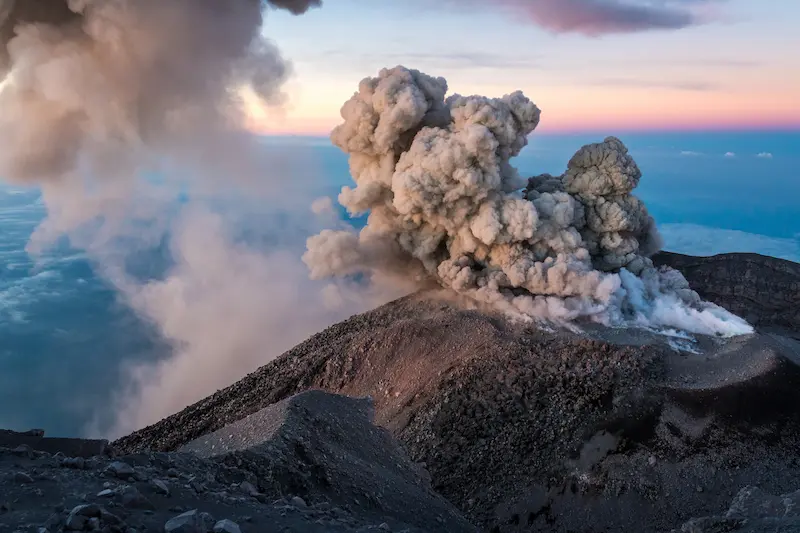
Volcanoes aren’t just a fascinating phenomenon. By collecting samples of lava and volcanic rock, scientists have a better understanding of Earth’s interior. Volcanic eruptions are also very dangerous for the surrounding communities. If scientists can monitor and actively predict when an eruption will happen, they could save thousands of lives.
Volcanoes are also not unique to Earth. Scientists have found evidence of volcanoes on both Mars and Jupiter. Studying how volcanoes work on Earth gives us a better idea of how they work on other planets, too.
Exploring Earth Through Volcanoes
Magma comes from the Earth’s interior and becomes lava once it reaches the surface during an eruption. When it cools, lava forms igneous rocks like obsidian. By studying igneous rocks and volcanoes as a whole, we can understand what makes up Earth’s interior and the warning signs for an incoming eruption. Encouraging curiosity-driven questions is a great way for students to learn about geology, chemistry, and Earth science.
Read more deep dives from STEM to Stern at the links below.






STEM Education Works is dedicated to providing cost-effective and user-friendly access to top-notch STEM curricula and technologies, driven by our mission to transform students’ lives. Learn more about what we do through our socials, Facebook, Twitter, Youtube, LinkedIn, Instagram, and TikTok.