


How did Archimedes discover buoyancy?
June 18, 2026
What’s the most interesting experiment?
June 19, 2026
Many animals have evolved unique traits and behaviors to adapt to their environment. These adaptations improve an organism’s chances of survival in harsh environments. Because there are so many different environments on Earth, many animals have developed bizarre adaptations to survive severe conditions. Studying these adaptations helps scientists better understand life on Earth and may even provide clues about life on other planets.
What Are Animal Adaptations?
Adaptations are any physical or behavioral change that helps an organism survive and reproduce in their environment. These traits pass from parent to offspring and develop over generations. Many adaptations help organisms find food. For example, pandas have developed flat molars to crush and grind bamboo stalks. Other adaptations help animals hide from predators. Many animals have developed camouflage to hide from predators in their environment. For example, the snowshoe hare has a brown coat most of the year, but then grows a white coat during the winter to blend in with the snow. Even more animals have developed adaptations that help them survive extreme temperatures and conditions.
The Frozen Frog
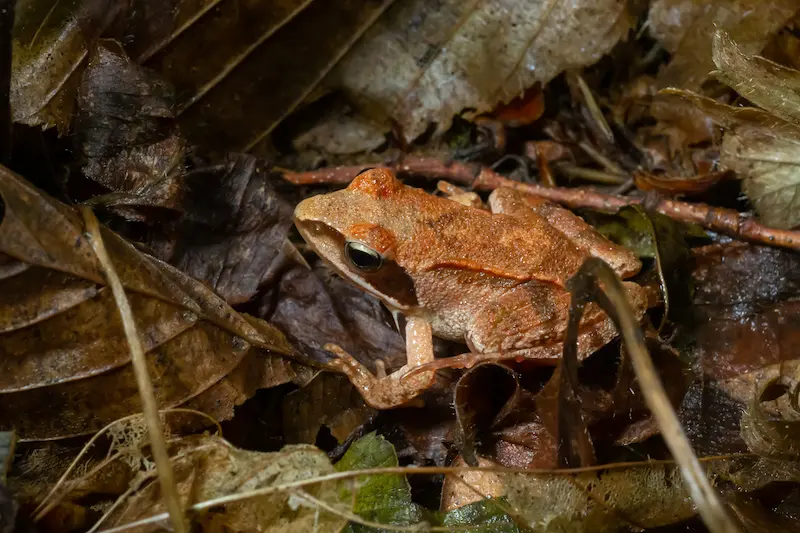
Alaska is home to some of the coldest temperatures in the U.S., but extreme cold and heavy snow hasn’t stopped many organisms from living in the tundra. The Alaskan Wood Frog is one of the most remarkable examples of animals adapting to their environments. This species of frog can survive being partially frozen during winter months. Most frogs hibernate deep in lakes and ponds during the winter, where the temperature never drops below freezing. According to the National Park Service, wood frogs hibernate below trees underneath the fallen leaves. The leaves and a layer of snow insulate them, but their body temperature still drops below freezing. The frog can survive these conditions by producing excess glucose that lines their internal organs. Their entire body freezes, except for their organs, which keep them alive while the rest of their body is frozen solid. In spring, they slowly thaw out and return to normal.
Life Without Sunlight
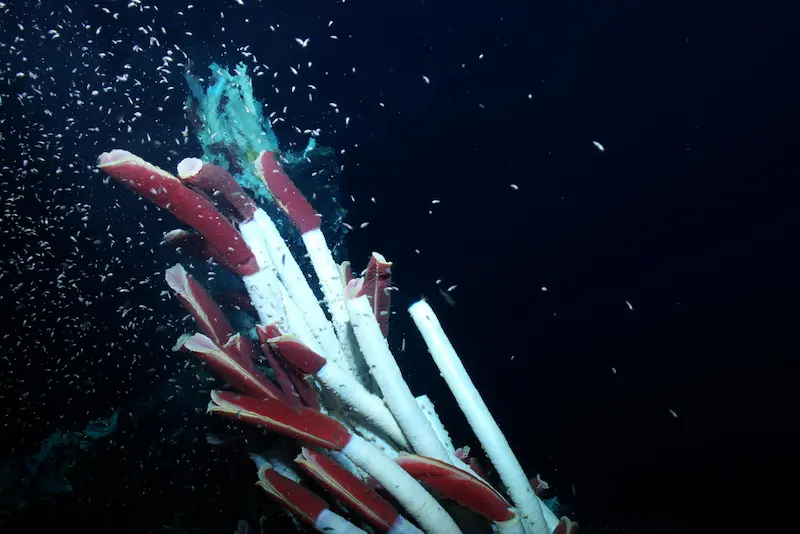
Deep in the ocean, there is no sunlight, intense pressure, and extreme temperatures. This seemingly uninhabitable place is home to the tubeworm. According to the Bureau of Ocean Management, this worm lives near hydrothermal vents at the bottom of the ocean. These vents are at the border of tectonic plates, meaning they can get up to 572°F. These worms don’t have a digestive system. Instead, they rely on a special type of symbiotic bacteria inside of their body. Because there is no light in their habitat, these bacteria produce their food through chemosynthesis, rather than photosynthesis. They turn the chemicals from the hydrothermal vents into energy. This means that life is possible without sunlight, which has expanded our understanding of what makes a habitable environment.
What Animal Adaptations Can Teach Us About Space
Because many organisms on Earth are able to adapt to seemingly uninhabitable habitats, scientists have theorized that there could be life on other planets. Europa, one of Jupiter’s moons, is theorized to have an ocean underneath its icy surface. These conditions could be similar to the depths of our oceans on Earth. This means that there could be tubeworm-like organisms at the bottom of Europa’s ocean. In 2024, NASA sent a spacecraft to explore the possibility of life on Europa, and it is expected to get there in 2030. Exploring Europa’s ocean could help researchers imagine what extraterrestrial life could look like.
Why Animal Adaptations Matter
Learning about animal adaptations furthers our understanding of life. As we explore deeper into the ocean, we may discover more organisms with unique adaptations. Many scientific breakthroughs begin with observing nature. Some engineers are inspired by animal adaptations to solve human challenges. For example, Japan’s high-speed trains traveled quickly but created a loud boom as they traveled through tunnels. To solve this problem, engineers were inspired by the kingfisher, a bird that dives into water to catch prey without creating a splash. By designing the front of the train to mimic the kingfisher’s beak, the train became nearly silent.
Nature Finds a Way
Animal adaptations reveal nature’s creativity and resilience. From frozen frogs to bacteria-filled worms, Earth’s organisms continue to surprise us. Studying these adaptations helps us understand life on our planet and fuels our search for life on other planets. The more scientists learn about how life survives here, the better prepared we are to find it elsewhere, like on Europa. Learning about adaptations gets students engaged and can help them create efficient designs inspired by nature.
Read more deep dives from STEM to Stern at the links below.





STEM Education Works is dedicated to providing cost-effective and user-friendly access to top-notch STEM curricula and technologies, driven by our mission to transform students’ lives. Learn more about what we do through our socials, Facebook, Twitter, Youtube, LinkedIn, Instagram, and TikTok.