

School and Industry Partnerships
June 16, 2026
Do Theories Ever Become Laws?
June 16, 2026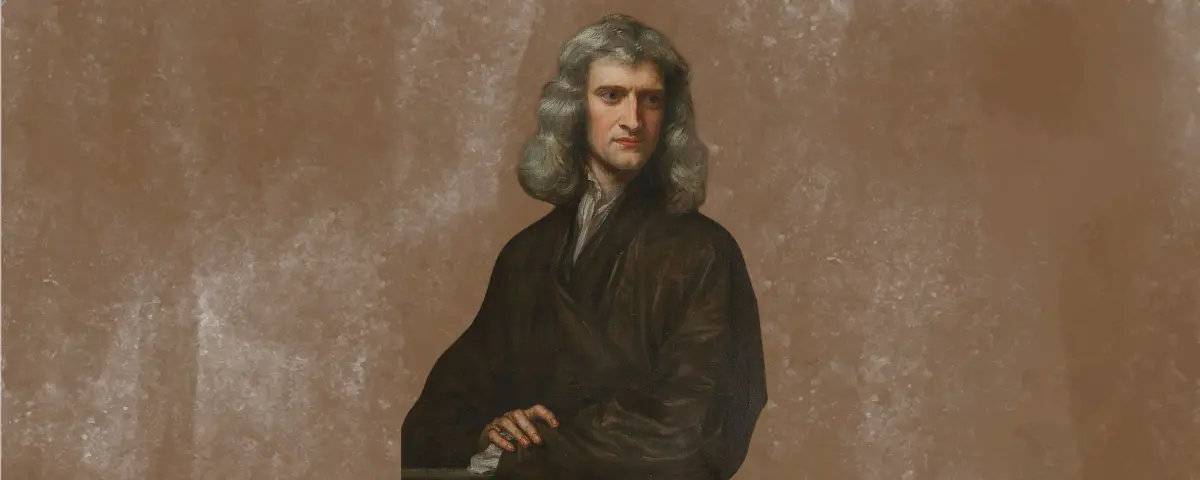
STEMgineer’s Guide to Problem Solving Workbooks
One of the smartest scientists in history went blind as a consequence of a science experiment. Isaac Newton was a pioneer in physics and mathematics during the Enlightenment. While trying to understand sunspots, he temporarily blinded himself by staring at the sun. Despite his intelligence, Newton didn’t understand how harmful the sun could be. Today, safety is the top priority when conducting scientific experiments to prevent harm like the injury Newton experienced.
Who Was Isaac Newton?
Isaac Newton was born in 1643 in the United Kingdom. He developed his famous Laws of Motion in 1687 in a book called the Principia. Newton’s Principia is one of the most influential scientific books ever written because it changed our understanding of gravity and physics. He was a mathematics professor at Cambridge for much of his life and developed calculus during his tenure. His work is influential to this day and was foundational for later scientists like Albert Einstein to understand how physics works in space.
The Sun Experiment That Damaged Newton’s Vision
During Isaac Newton’s time, scientists were trying to understand the planets and space, but the telescopes of the time used glass lenses to magnify distant objects. Using only lenses distorted the color and quality of the object. Newton was one of the first scientists to use mirrors instead of lenses to view objects in space. During the experiment that damaged his eyes, Newton studied the sun’s reflection in a mirror to observe sunspots, which are small dark spots on the sun. Newton assumed that the sun’s reflection wouldn’t be as harmful as staring directly into the sun. His vision began to deteriorate, but he assumed that his eyes would adjust. His eyes never adjusted, and he ended up with spots in his vision that lasted for months along with temporary blindness.
In Newton’s time, scientists didn’t understand the importance of protecting yourself and being cautious during an experiment. Over time, scientists learned the importance of experimenting with caution and developed lab safety gear like safety glasses, gloves, and lab coats.
How Modern Technology Changed Scientific Research
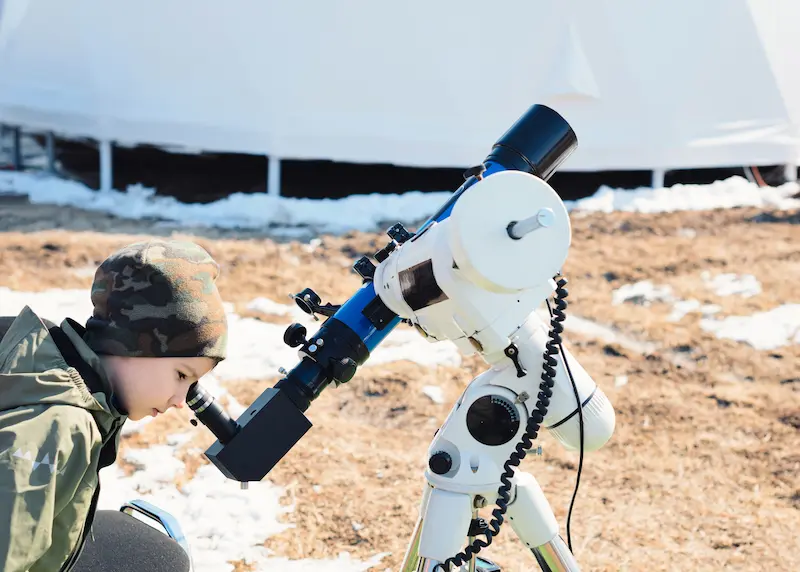
Today, when scientists study the sun, they use solar filters on telescopes to protect their eyes from the sun’s harmful rays. If you’ve ever watched an eclipse, eclipse glasses have a solar filter, so you can look at the sun without damaging your vision. When studying sunspots today, scientists at NASA use digital cameras and telescopes to accurately measure sunspots. These cameras can detect more sunspots than our eyes. These innovations have helped scientists safely and accurately study our universe.
What This Story Teaches Students About STEM
Newton’s dangerous mistake teaches students that scientific work requires caution. Curiosity drives scientific exploration, but safety should be the number one priority during scientific experiments. Scientific mistakes have sometimes contributed to progress, but they often come with unintended costs. Even the smartest scientists can make mistakes, so it’s important to test and reflect repeatedly during a STEM experiment. Intelligence does not replace critical thinking and caution. STEM requires students to observe, test, and reflect on their results. Some students struggle to realize the importance of reflection, but consistent reflection is important for innovation and helps prevent mistakes.
Read more deep dives from STEM to Stern at the links below.

STEM Education Works is dedicated to providing cost-effective and user-friendly access to top-notch STEM curricula and technologies, driven by our mission to transform students’ lives. Learn more about what we do through our socials, Facebook, Twitter, Youtube, LinkedIn, Instagram, and TikTok.