
Exploring the World of AI with the Dobot Magician Lite
June 1, 2026
Kickstart Your STEM Program: Easy Wins for the Start of the Year
June 8, 2026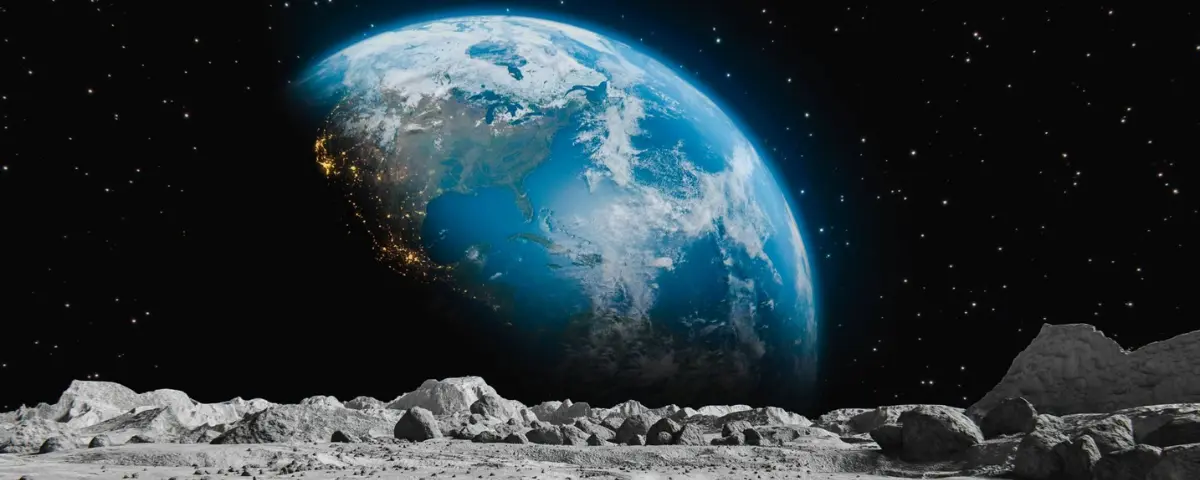
STEMgineer’s Guide to Problem Solving Workbooks
We’ve landed on the Moon multiple times, but what’s stopping humanity from building a city there? NASA and SpaceX have announced plans to build a Moon base, but a permanent settlement on the Moon remains science fiction for now. Although astronauts have visited the Moon, living on its surface would be incredibly challenging because it lacks oxygen, reliable water sources, and the nutrients needed to grow plants. Scientists are constantly researching and trying to develop solutions to support life on the Moon, so it’s possible that a Moon colony could happen in our lifetime.
What Humans Would Need to Live on the Moon

Unlike Earth, the Moon doesn’t have an atmosphere. This means that there is no oxygen in the air that humans need to breathe. Without an atmosphere, the Moon has no protection from the Sun’s heat and radiation, meaning that the city would need to be enclosed to protect from the Sun’s deadly rays. Life on the Moon would mean that we would need to grow our own food. Plants need an atmosphere with carbon dioxide and light to grow. Plants also need nutrient-dense soil, which humans would need to bring from Earth and frequently replenish since the Moon’s surface is mostly dust and rocks. Scientists at NASA have discovered some water on the Moon, but it is difficult to access and wouldn’t be sufficient to sustain human life. These challenges would mean that a city on the Moon would rely heavily on supply trips from Earth, which could be incredibly costly.
Why Technology is Still the Biggest Challenge
Even with the necessary funding, the technology to live on the Moon isn’t quite there yet. According to NASA, scientists are still developing ways to harness energy on the Moon, create self-sustaining environments, and develop a reliable communication system between Earth and the Moon. Getting power on the Moon is not as simple as plugging a cord into an outlet. Most lunar vehicles use solar power, but engineers are continually developing new ways to harness energy in space, such as nuclear power. Building on the Moon is also a challenge due to low gravity. Essentially, everything we know about building structures is based on Earth’s gravity, so engineers would have to rethink how to create stable, long-lasting buildings. Currently, living on the Moon would require constant trips back to Earth for life-sustaining supplies. This system wouldn’t be able to sustain a colony in the long term, so scientists are currently exploring ways to make transporting supplies faster and easier.
How a Moon Base Could Help Space Exploration
Building a base on the Moon could make future space exploration easier. Astronauts could land on the Moon or enter the Moon’s orbit to pick up supplies necessary to travel to other planets. Currently, reaching other planets would take years, meaning astronauts would need enough supplies to last the long journey.
A lunar base could help humanity achieve its goals of exploring the universe. While the Moon is much closer to Earth than the nearest planet (Mars), launching a rocket off the Moon actually requires less energy because the Moon has lower gravity than Earth. Scientists at NASA and other space organizations around the world are constantly exploring ways to advance space exploration and send humans to other planets.
The Fun Side of Moon Cities

Beyond the logistics of a lunar base, a city on the Moon could create many interesting opportunities. For example, an amusement park on the Moon could be significantly more fun than one on Earth because of the Moon’s lower gravity. Imagine riding a roller coaster on the Moon and feeling like you’re floating through space due to low gravity. If the Moon cannot sustain permanent settlements, it could serve as a tourist destination where people travel to the Moon, briefly enjoy low-gravity fun, and head back to their homes on Earth.
You can also bring this idea into the classroom. Challenge your students to create a roller coaster for the Moon. What does a roller coaster in low gravity look like? What powers this roller coaster? They can even try to create their own roller coasters using classroom craft supplies.
The Future of Lunar Living
Living on the Moon remains a distant reality, but scientists are continually innovating. A city on the Moon could happen in our lifetime, but it would require technology we haven’t yet developed. Your students could be the future innovators who help build a city on the Moon. A permanent base would make space exploration easier, and it could be a once-in-a-lifetime tourist destination.
Read more deep dives from STEM to Stern at the links below.





STEM Education Works is dedicated to providing cost-effective and user-friendly access to top-notch STEM curricula and technologies, driven by our mission to transform students’ lives. Learn more about what we do through our socials, Facebook, Twitter, Youtube, LinkedIn, Instagram, and TikTok.