

What’s the weirdest animal adaptation?
June 19, 2026
Which discovery would you have liked to witness? Here’s our pick.
June 22, 2026
Modern experiments often rely on advanced technology, but some of history’s most impressive discoveries were made with simple tools. More than 2,000 years ago, a Greek scholar named Eratosthenes calculated the circumference of the Earth using sticks and shadows. His experiment is still one of the most impressive examples of scientific thinking and problem-solving.
Eratosthenes: A Scholar Ahead of His Time

Eratosthenes was born in modern-day Libya (which was a part of Ancient Greece) in 276 BC. He studied geometry, astronomy, mathematics, and more. He was nicknamed “Beta” because he was considered second-best in many of the fields he studied. Eratosthenes developed an algorithm to find prime numbers and wrote a book on constellations, but he is best known for calculating the size of the Earth. The Ancient Greeks knew that the Earth was round, but no one had traveled all the way around the globe to measure the Earth.
The Question: How Big Is the Earth?
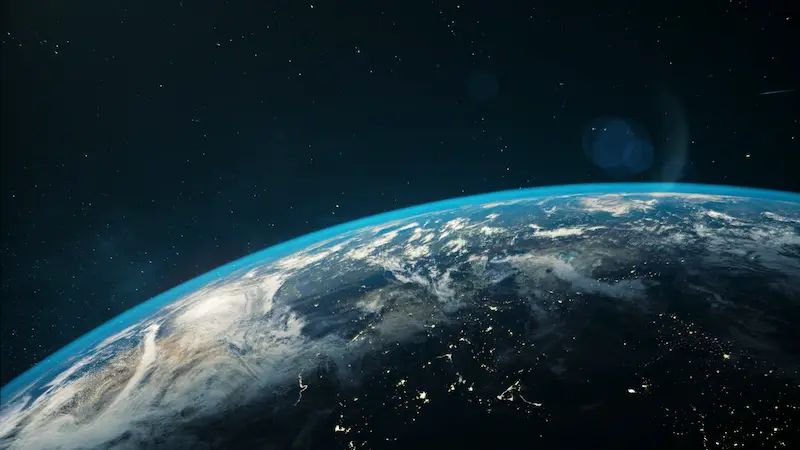
Ancient Greece didn’t have ships that could sail around the world or airplanes that could fly over continents. At the time, the Greeks didn’t know about the Western hemisphere and knew little about Southeast Asia and the southern tip of Africa. Without satellites or GPS, Eratosthenes believed he could calculate the curvature of the Earth, which would help him calculate the circumference. He used thorough observations and mathematics to help him solve this problem without modern tools.
The Experiment: Measuring with Sticks and Shadows
Through his study of astronomy, Eratosthenes knew the sun was far enough away that he could use shadows to measure the Earth’s curvature and calculate the circumference. He set up two measurement sites in Egypt, one in Alexandria and the other in Syene. Syene was south of Alexandria, and when Eratosthenes visited the city, he noticed that the bottom of a well was illuminated at midday. This meant that the sun was directly overhead in that location. In Alexandria, the sun came down at an angle at noon. He measured the difference in shadow angle to calculate the Earth’s curvature.
From there, he just needed to measure the distance between Syene and Alexandria, but accurate measurement was nearly impossible. Eratosthenes paid someone trained to take equal steps to walk between the two cities and measure the distance by counting steps. With this measurement, Eratosthenes was able to estimate the circumference of the Earth. While his measurement system wasn’t completely accurate and isn’t used today, his estimate was extremely close to the real size of Earth.
Why This Experiment Was So Revolutionary
Over 2,000 years later, this scientific experiment demonstrates the power of observation and mathematical reasoning. Scientific discoveries don’t require advanced technology, and anyone can replicate Eratosthenes’s experiment. Eratosthenes was within 2% of the real circumference of Earth by just measuring shadows and counting steps. He was using the scientific method and STEM thinking by observing, collecting data, and analyzing the results to solve a problem. Students can apply the same thinking to tackle big questions using simple tools and careful observation.
The Power of Simple Ideas
Eratosthenes proved that observation, mathematics, and creativity can solve extraordinary problems. His experiment reminds us that STEM is not just about technology. Critical thinking and creativity are just as important as technology when solving problems. Eratosthenes’s approach still holds up to this day, proving the power of mathematical reasoning.
Read more deep dives from STEM to Stern at the links below.


STEM Education Works is dedicated to providing cost-effective and user-friendly access to top-notch STEM curricula and technologies, driven by our mission to transform students’ lives. Learn more about what we do through our socials, Facebook, Twitter, Youtube, LinkedIn, Instagram, and TikTok.