


Which comic book character would smell the worst? Exploring the science of smell in comic book characters.
June 8, 2026
Integrating the Engineering Design Process in the Classroom
June 11, 2026
STEMgineer’s Guide to Problem Solving Workbooks
Earthquakes shape landscapes, impact communities, and challenge engineers to design safer buildings. Some earthquakes are so minor that many people don’t realize that anything has happened, and others can cause severe damage to communities. The severity of an earthquake is measured on the Richter scale. By studying earthquakes, students learn about geology, physics, and engineering with classroom STEM activities.
How Earthquakes Are Measured
Earthquakes are caused by sudden releases of energy underneath the Earth’s surface. This energy generates vibrations that make the Earth shake during an earthquake. Earthquakes occur naturally, but their frequency and intensity can be affected by human activities such as mining and fracking.
To measure an earthquake, scientists use seismographs, which can detect small vibrations beneath Earth’s surface at all times. Using these instruments, scientists can track the center of an earthquake, also known as the epicenter. Seismographs measure the intensity and the magnitude of an earthquake. The magnitude is the total amount of energy released, and the intensity is the amount of shaking and damage in a specific location.
The Richter Scale
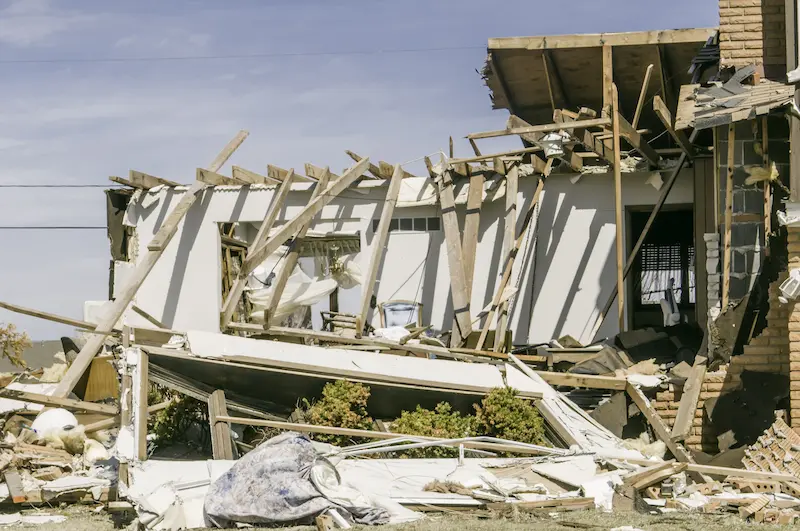
In the 1930s, Charles Richter developed a scale for measuring the magnitude of an earthquake. Seismographs record vibrations in waves, just like a heartbeat monitor. The amplitude, or height, of the wave determines where it falls on the Richter scale. The scale runs from 1 to 9. A 1 or 2 on the Richter scale is a very minor earthquake; usually, people do not even realize they are experiencing one. A 7-9 rating on the Richter scale means the earthquake will cause severe damage to most buildings, but strong earthquakes like this are extremely rare and typically occur only around the Pacific Ocean.
Earthquakes in Unexpected Places
Most earthquakes occur around the Pacific Ocean, in an area known as the Ring of Fire. In this area, several major tectonic plates frequently collide, causing seismic activity. Major seismic activity in this area often causes tsunamis because the massive energy shakes the ocean, generating large waves. In this area, buildings are constructed to withstand extreme shaking so they do not collapse during a severe earthquake or tsunami.
Although several areas in the United States and around the world experience more earthquakes than most, earthquakes can occur anywhere. Most famously, in 1811 and 1812, multiple devastating earthquakes occurred around the New Madrid seismic zone at the intersection between the Mississippi and Ohio rivers. One of these earthquakes even caused the Mississippi River to flow backward. While major earthquakes in the Midwest are rare, they aren’t unheard of, so scientists are constantly monitoring activity around the world to warn communities of an incoming earthquake.
Hands-On Activity: Modeling Seismic Activity with Jell-O

Places that experience frequent earthquakes must carefully construct tall buildings to ensure they won’t collapse during an earthquake. In the classroom, if you want to get your students excited about engineering, have them try building a structure that will hold up during an earthquake. Beforehand, you’ll need to prepare two sheets of Jell-O, one according to the package instructions and one with slightly less water to make it firmer. Place the set Jell-O on a paper plate, and have your students place their finished creations on the firm Jell-O. Gently shake the Jell-O to see if their creations could withstand an earthquake. If they can, place them onto the normal Jell-O to see if their buildings could hold up in a severe earthquake. This activity is a great way to get students excited about engineering and gives them a chance to build and test their projects, and who doesn’t love Jell-O?
Earthquakes and STEM Engineering
By learning about earthquakes, students can understand the importance of engineering while staying engaged in a fun activity. Students can learn about earth science and how engineering and design can protect communities during a natural disaster. Earthquakes happen every day, and studying them allows scientists to better predict when and where the next severe earthquake will be. Getting hands-on experience in engineering helps students connect real-world phenomena to STEM learning.
Read more deep dives from STEM to Stern at the links below.






STEM Education Works is dedicated to providing cost-effective and user-friendly access to top-notch STEM curricula and technologies, driven by our mission to transform students’ lives. Learn more about what we do through our socials, Facebook, Twitter, Youtube, LinkedIn, Instagram, and TikTok.