
Dobot in the High School Robotics Classroom
June 15, 2026
Get Your Grant! Funding Your Studio or Classroom
June 16, 2026
Education has a perfectionist problem. Many students avoid risks because they fear making mistakes. STEM learning is a unique opportunity for students to break that mindset and learn to embrace failure. In STEM, failure is part of the process. Every failure is one step closer to succeeding. STEM activities help students develop resilience and problem-solving skills.
Redefining Failure in the Classroom
Many students view failure as the opposite of success. In reality, failure is the gap between an expected or desired result and the actual outcome. Organizations like NASA view failure as an early attempt at success. Many inventors created thousands of failed iterations of their products before succeeding, but students are still afraid to fail, especially if they’re gifted. This perfectionism limits creativity and innovation since students are afraid to take risks.
Four Types of Failure Students Experience
Students are learning how to navigate the world. They’re learning fundamental social and emotional skills that impact their life inside and outside the classroom. Students will have to overcome many failures in life to grow and succeed, and categorizing these failures can help them learn.
- Academic failures: When a student fails to meet expectations on an assignment, test, or overall grade.
- Personal goal failures: When a student sets a goal for themselves, such as making a sports team or learning to play an instrument, and fails to achieve it.
- Social and emotional challenges: When a student has difficulties developing social skills, making friends, managing emotions, or resolving conflict
- Skill development failures: When students struggle to acquire essential skills like reading, writing, or basic math.
Each type of failure helps students build resilience, self-awareness, and problem-solving skills. By learning to reflect on setbacks and adapt, students develop the mindset needed for long-term success in and out of the classroom.
How Educators Can Create a Positive Culture Around Failure
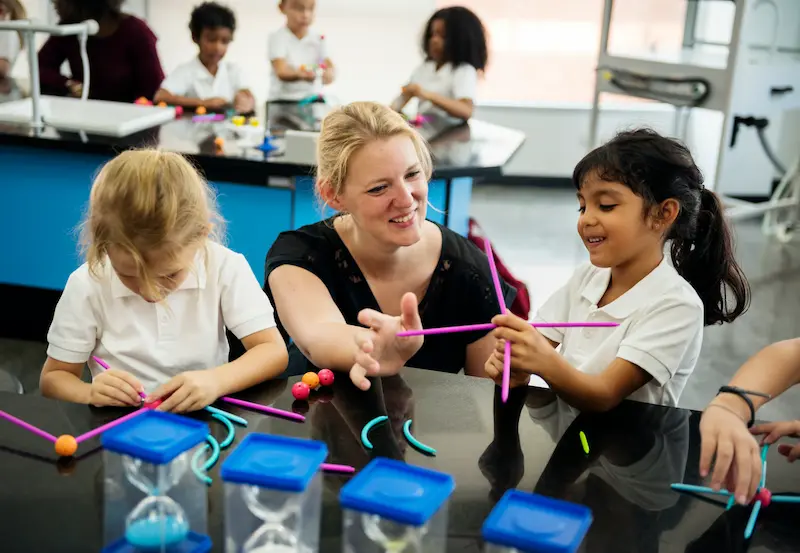
Helping students overcome perfectionism starts in the classroom. Students need to learn that failure is not the end but a learning opportunity. To implement this in the classroom, create activities where students can fail and celebrate those failures. You can destigmatize failure further by introducing “Failure Fridays” where students are encouraged to fail and keep track of their failures in a weekly journal. In their failure journal, prompt your students to reflect with questions like “Why didn’t this work?” and “What would I change next time?”.
Creating a positive culture requires educators to be vulnerable by telling students about their failures and what they learned. Write all your failures and what you learned in a failure resume and show it to your class. For older students, creating a failure resume can help them reflect while they’re applying to colleges and jobs.
The Engineering Design Process Turns Failure Into Learning
STEM’s approach to learning is different from traditional science or math education. Science experiments and math equations require students to follow step-by-step instructions to reach a solution. If they don’t reach the correct solution, the student assumes that they missed a step or made a mistake.
In STEM learning, students have to think iteratively and learn from their failures. The Engineering Design Process repeats over and over, compared to step-by-step instructions, which have a clear beginning and end. In this process, students plan, create, test, and improve their designs over and over again. Unlike science or math, there is not a single, exclusively “right” solution. When you introduce activities to your students, be mindful of your wording, so you’re not leading your students to the same solution. For example, use “launching device” instead of “catapult” or “light” instead of “flashlight”. Students can use their creativity and improve their designs to solve the problem uniquely.
Failure Builds Future Innovators
Failure is an essential part of STEM, and it’s an opportunity for students to overcome perfectionism. Every unsuccessful attempt provides insight and is an opportunity for improvement. This mindset shift starts with STEM educators. Don’t be afraid to share your personal failures with the class and bring in examples of real-life innovators who learned from their failures. With activities that encourage failure and use the Engineering Design Process, you can help your students reframe failure and build perseverance.
STEM Education Works is dedicated to providing cost-effective and user-friendly access to top-notch STEM curricula and technologies, driven by our mission to transform students’ lives. Learn more about what we do through our socials, Facebook, Twitter, Youtube, LinkedIn, Instagram, and TikTok.