

The Ethics of Digital Data Collection
July 6, 2026
Bugs, Bots, and Circuits, Oh My! STEM Education Works and Brown Dog Gadgets
July 6, 2026
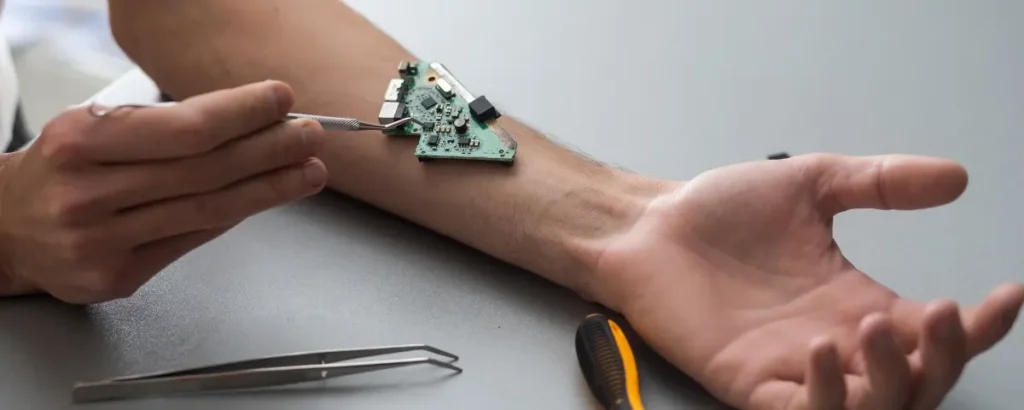
Would you want to connect your brain to a computer? Recent advances, like Neuralink, allow users to control computers or robotic prosthetics using their thoughts. This technology has the potential to help a lot of people with severe disabilities, but the idea of implanting technology into the brain makes many people concerned about potential consequences.
How Do Brain Implants Work?
Brain implants read electrical signals that the central nervous system naturally produces. Brain implants have existed as a medical treatment for specific neural diseases since the late 1990s. These implants stimulate a specific part of the brain to treat essential tremor, Parkinson’s disease, epilepsy, and obsessive-compulsive disorder (OCD). These implants only send electrical signals, but scientists have developed implants that allow people to control machines using their thoughts, known as BCI (brain-computer interface). BCIs detect neural signals in the brain and translate those signals into a computer.
Concerns about Personal Autonomy
Connecting the brain to a computer raises a lot of ethical concerns for many people. For example, how will a BCI company ensure that this technology is secure? A hacker taking control of someone’s brain raises many concerns about how this technology could make someone more vulnerable. Similarly, how will a company protect its customers’ data about what is going on in their brains? Although this technology could advance humanity, it also raises ethical concerns about accessibility. BCIs are extremely costly, meaning that people who need this technology cannot afford it. If healthy people have access to this technology, could it be used to give them mental advantages? While this technology was created to help people with neuromuscular disabilities, it could have negative impacts on society if the ethical implications of this technology are not considered.
Helping People with Severe Disabilities

The ultimate intention behind BCIs is to help people who cannot move or communicate due to disability gain some autonomy. There are multiple types of BCIs to help people based on their disability. Motor BCIs read signals from the motor cortex and translate those signals into actions, allowing the user to move a prosthetic limb or a cursor on a computer screen. Speech BCIs translate brain signals into text, which can help people who’ve suffered from a stroke or ALS have their voice heard.
The Future of BCIs
BCIs are still being tested, but the field has the potential to help millions of people. Researchers at Paradomics are even working on developing BCIs that can help alleviate mental illness and drug addiction. BCIs are still in clinical trials, but it’s possible that many years in the future, we’ll have the technology to read other people’s minds or show our dreams to others. While the future of this technology is uncertain, the industry is growing and will need scientists, engineers, and programmers. The next generation of innovators may play a key role in shaping technologies that improve lives while upholding ethical responsibility.
Read more deep dives from STEM to Stern at the links below.





STEM Education Works is dedicated to providing cost-effective and user-friendly access to top-notch STEM curricula and technologies, driven by our mission to transform students’ lives. Learn more about what we do through our socials, Facebook, Twitter, Youtube, LinkedIn, Instagram, and TikTok.