


What scientific field or study do you think is currently underrated or overlooked?
July 6, 2026
Faster-Than-Light Travel: Science or Science Fiction?
July 6, 2026
If aliens landed on Earth, what piece of technology would impress them? While aliens would have more advanced space travel technology, could they match some of our greatest innovations, like smartphones and advanced manufacturing? Smartphones would certainly impress, but many everyday innovations demonstrate just how far STEM has advanced.
The Obvious Choice: Smartphones

From a small device that fits in your pocket, we can communicate with people across the world, access the Internet, and connect to satellites through GPS. Smartphones demonstrate how quickly we’ve advanced. Alexander Graham Bell invented the telephone in 1876, and only 150 years later, it’s advanced from a device that transports sound through wires to a powerful computing device that we can hold in our hands. Smartphones are the culmination of many different technologies, like computers, LCD screens, and GPS. According to Adobe, the microchip in your smartphone is 900 million times faster than the computer that controlled the Apollo 11 mission to the moon. While the smartphone is an incredible technology, other innovations demonstrate how impressive and important human engineering is to our lives.
The Hidden Marvel of Modern Manufacturing
The everyday items you buy at the grocery store demonstrate our advanced technology and manufacturing systems. For example, the sharpest blade you can buy is actually on an everyday razor you can purchase at any grocery store or drugstore. These razor blades are manufactured with incredible precision. The sharp edges of these blades are measured in nanometers. This means that you have to use a microscope to measure the sharpness.
Manufacturing is everywhere, and we often take it for granted. Innovations like robotic arms, laser cutters, and automated production lines are responsible for the manufactured goods we use every day. Many of these inventions only exist because of STEM concepts, like engineering, computer programming, and robotics.
The Rise of 3D Printing
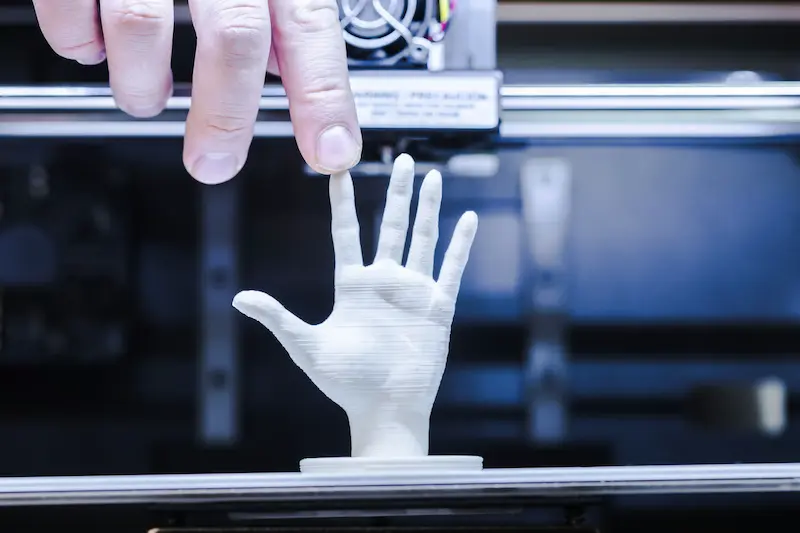
3D printing has changed how we design and manufacture objects, and it could be a contender for some of the most impressive technologies we have. According to the American Society of Mechanical Engineers, the first 3D printer was invented in 1980. This invention completely changed how engineers developed prototypes. A 3D printer can create small-scale prototypes and custom parts quickly and at a lower cost. Only 30 years later, the public could purchase 3D printers, meaning that students and everyday inventors could experiment with designing their own creations.
3D printing hasn’t just changed the manufacturing industry. According to the National Science Foundation, scientists have successfully 3D printed human tissues, prosthetics, and entire homes! It’s completely changed how we create parts for cars and airplanes, and there are even some nanoscale 3D printers that create microelectronics, like computer chips.
What Would Aliens Think?
Ultimately, we don’t know what technology aliens would have. They could be impressed by our smartphones or our precision manufacturing, or they could believe all our technology is primitive. No one knows what fantastic technology extraterrestrials could have, if they exist at all. Encourage your students to imagine what technology aliens could have, and what technology best represents humanity.
Innovation Is All Around Us
Human innovation isn’t limited to our flashy gadgets. Many of our greatest achievements are hidden inside everyday products. Our efficient, precision manufacturing produces high-quality products that anyone can afford. STEM innovation continues to push the boundaries of manufacturing, medicine, and exploration.
Read more deep dives from STEM to Stern at the links below.




STEM Education Works is dedicated to providing cost-effective and user-friendly access to top-notch STEM curricula and technologies, driven by our mission to transform students’ lives. Learn more about what we do through our socials, Facebook, Twitter, Youtube, LinkedIn, Instagram, and TikTok.