


Planting the Seeds of Innovation: STEM in Agriculture
November 3, 2025
Building the Future in Greater Lafayette and Beyond
December 17, 2025Electrifying STEM!: A Crash Course in Circuitry, Part II
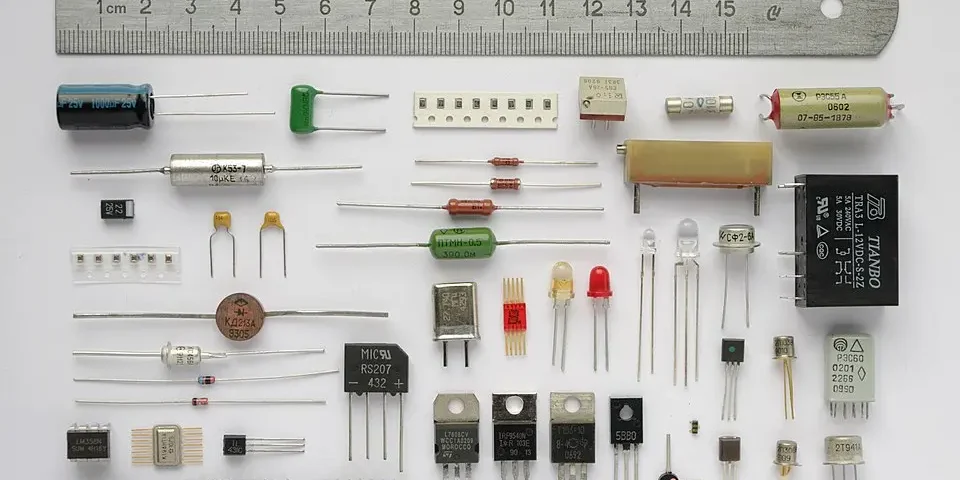
Welcome back, everyone, for Part II of our crash course in circuitry! In Part I of this blog, we took a quick tour through the basics of electricity, electrical circuits, and Ohm’s law. Today, we will be branching out to learn about the wide variety of circuit components that you and your students will inevitably encounter as you explore the world of electrical circuits!
- Resistors:
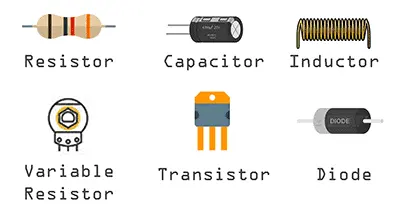
A resistor does exactly what its name suggests. You know how a speed bump is designed to make a car slow down? Well, a resistor is basically a speed bump for electrons, resisting the flow of electricity through it and thus slowing down the rate at which electrons flow through your overall circuit. In other words, by increasing the amount of total resistance in your circuit, resistors allow you to lower the current in your circuit down to a precise, optimal value. (After all, too much current in a circuit can fry your circuit components!)
- Diodes:
Continuing on with the driving analogies, a diode acts like a one-way street, allowing electrons to travel through it in one direction only. In other words, a diode is designed to have a very high conductance (i.e., low resistance) along one direction and a very low conductance (i.e., high resistance) along the other direction.
While you may not be familiar with the term “diode,” I guarantee that you are familiar with a common example of one: LEDs, or “light emitting diodes.” These little devices convert electrical energy into light, but they only allow electricity to flow through them in one direction!
- Transistors:
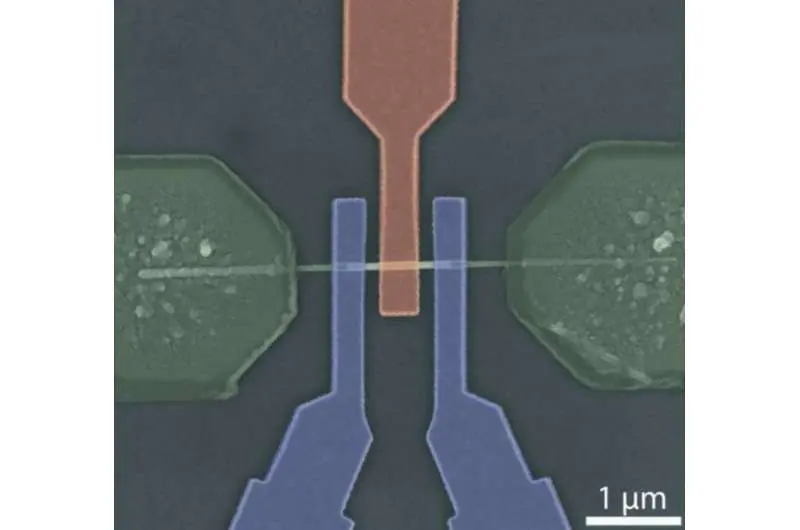
A transistor acts like the gate of a castle, opening to allow current to flow through it or closing to prevent the flow of current through it. Most transistors feature three little metal pins that extend from their main body: the collector, the base, and the emitter. The collector pin provides a path for electrons to flow into the transistor, while the emitter pin provides a path for electrons to flow out of the transistor. And by applying a small current to the base pin, one can control when the “gate” of the transistor is open or closed. And the truly amazing thing is, transistors accomplish this all without any moving parts! Just the clever use of semiconductor materials!
Transistors have played a monumental role in the history of computer science, acting as the most basic units of computation and serving as the foundation for all modern computer technology. As you may know, computers use a language of 1s and 0s called “binary” to crunch numbers and carry out given tasks. Well, each of those 1s and 0s in a binary sequence can be attributed to a tiny little transistor on a computer chip that is either on or off, open or closed, respectively. And as technology has advanced over the years, transistors have gone from being a few millimeters in size in the 1940s to just a few nanometers in size in the modern day, allowing scientists and engineers to pack billions and billions of these tiny, microscopic devices onto a single computer chip!
- Potentiometers:
Potentiometers are an interesting mix of resistors and transistors. Like a transistor, they can act like a switch and be used to allow or disallow the flow of current. But instead of having only two possible states (opened or closed, like a transistor), the small dial on a potentiometer can be used to take on a continuous number of states: open, closed, or any value in between! And when set to one of these “in between” values, a potentiometer essentially functions like a resistor. It should then come as no surprise that potentiometers are often referred to as “variable resistors” or “rheostats.”
And I can guarantee that you have used a potentiometer before, either knowingly or unknowingly! Have you ever used a dimmer switch to dim the lights in your living room? Or how about using the knob on your car’s radio to turn up the volume? Thank a potentiometer!
- Capacitors:
A capacitor acts a lot like a dam in an electrical circuit. In the same way that a dam stores potential energy by separating a large body of water from the empty space beside it, a capacitor stores energy by separating positive and negative charges. Inside a capacitor, you’ll typically find two terminals: two tiny surfaces placed very close to each other with some insulating material between them.
Capacitors are often used in circuits to build up a lot of energy over time, and then release that energy very quickly, acting much like a temporary battery!
- Inductors:
An inductor typically consists of an insulated wire wound into a small coil. When electricity flows through this coil, it produces and stores energy in the form of a magnetic field. And thanks to a phenomenon called “Lenz’s law,” when the current flowing through the coil changes, either in magnitude or direction, the magnetic field around the inductor resists this change and creates a voltage that opposes the change in current.
Due to their ability to resist changes in current, inductors are commonly used as filters in data transfer processes, blocking AC signals while allowing DC signals to pass. They can also be used to store and release energy, much like a capacitor.
Conclusion
The multitude of circuit components available to you and your students might seem like a zoo at first. But once you get to know each of these tools, you’ll become a pro in no time!
Again, if you’re interested in supercharging your STEM classroom with circuitry, be sure to check out our website! As I mentioned in Part I of this blog, our Brown Dog Gadgets kits offer a perfect mix of circuitry and crafting for younger students! And for older students, our Build Smart and micro:bit kits are an excellent way to bring the worlds of circuitry and coding together in your classroom. And to sprinkle a little VR technology onto the subject of circuitry, be sure to check out our MindLabs products! Not to mention our Horizon Educational kits, which combine circuitry with renewable energy concepts!
Thanks again for tuning into Part II of this blog! Be sure to catch Part III in the near future, where we’ll dive into the world of breadboards and multimeters! Until next time.
– Dr. Jake Roark