


Which discovery would you have liked to witness? Here’s our pick.
June 22, 2026
Fostering Community Connections through STEM Events
June 25, 2026
Science fiction books and movies often feature characters living on another planet, especially Mars. Could living on Mars eventually become reality instead of fiction? Nothing currently lives on Mars due to the planet’s harsh atmosphere, extreme temperatures, and high radiation levels. Humans would need to overcome these challenges to live on Mars, and scientists are continually researching the possibility of doing so.
Living on Mars
Everything on Mars is very different from life on Earth. The atmosphere is thinner and composed of carbon dioxide, nitrogen, and argon. Humans couldn’t breathe on Mars because the atmosphere lacks oxygen and would be toxic to humans. Because the atmosphere is so thin, Mars has little protection against extreme temperature changes. According to NASA, temperatures on Mars can drop as low as -225 degrees Fahrenheit. This cold also means that Mars is extremely dry. Liquid water cannot exist long on the planet’s surface, although frozen water exists near the poles. Mars is known as the “Red Planet” because extreme winds create iron-rich dust from oxidized rocks, creating the planet’s reddish appearance.
Terraforming vs. “Bubble Villages”
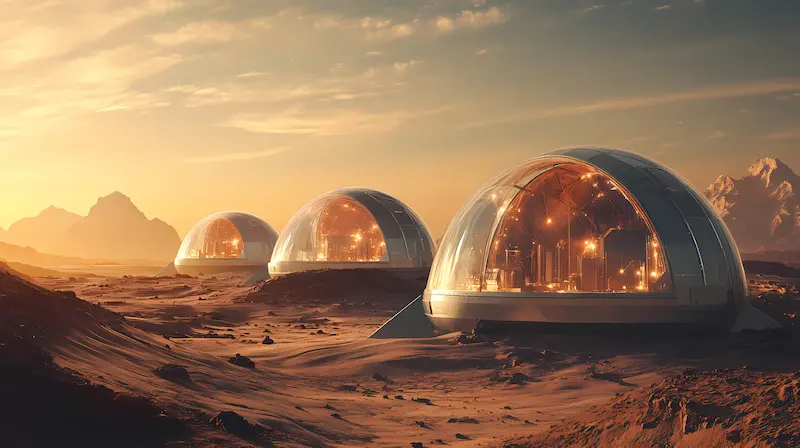
For humans to live on Mars long-term, scientists would need to create a habitable environment. One option is to terraform the environment by increasing the atmospheric density and creating conditions suitable for liquid water and food production. If scientists could successfully change Mars’s atmosphere, the planet could be a future home for humanity. Another option is to create settlements that protect us from Mars’s harsh atmosphere. Many science fiction stories feature “bubble villages” where humans live in large domes that mimic Earth’s atmosphere. Venturing outside these protected environments would require a durable spacesuit capable of withstanding the environmental challenges of Mars.
Challenges of Low Gravity
Along with a completely different atmosphere, Mars also has less gravity than Earth. Less gravity means that most physical activities are easier. For example, it would be significantly easier to dunk a basketball on Mars compared to Earth because it would take less effort to reach that height.
However, lower gravity could have negative consequences for humans living on Mars long-term. Because our muscles don’t have to work as hard to move, we would lose most of our muscle mass and bone density. Weak bones and muscles mean that our bodies would be more prone to damage. According to NASA, astronauts aboard the International Space Station (ISS) already experience muscle loss and reduced bone density after only a few months in space. To reduce these effects, astronauts must exercise daily while in orbit. Long-term Mars colonies would need ways to protect human health in reduced gravity environments.
Radiation and Other Survival Challenges
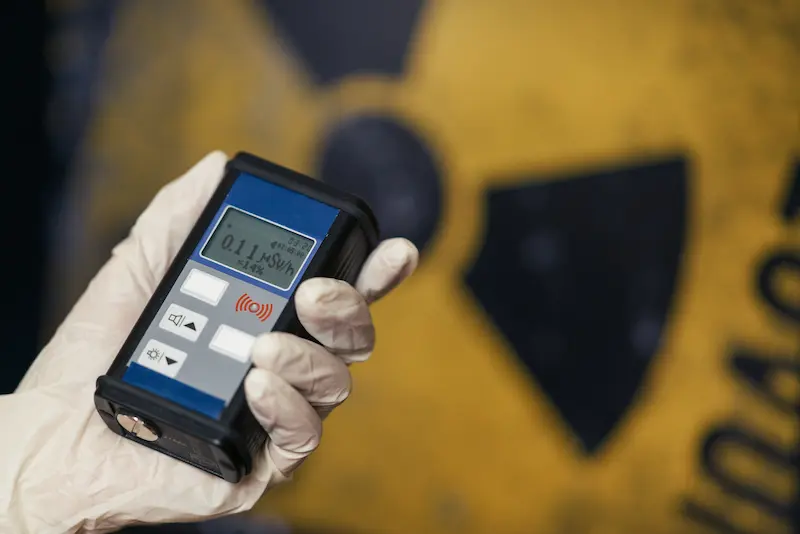
Mars also lacks a strong magnetic field, which leaves the planet exposed to harmful cosmic radiation. Radiation is an invisible force that transfers energy from one point to another, but this energy can be extremely damaging to cells in the body. Living on Mars would mean that any spacesuits or settlements would need protection from radiation. While modern spacesuits provide limited shielding, scientists still face major challenges in developing permanent protection for survival on Mars.
Humans Adapting to Mars
If humans could survive on Mars for multiple generations, it’s possible that we could adapt and evolve to survive in Mars’s harsh environment. Science fiction constantly explores the idea of “martians”, but humans could truly be the next martians by developing unique traits over time that help us overcome the environmental challenges of living on another planet, such as radiation or low gravity.
Future of Mars Colonization
Living on Mars is still science fiction, but research into Mars exploration continues to advance.
Scientists and engineers are constantly learning more and developing new technology that would allow humans to visit the planet. Encourage your students to think critically and develop a viable habitat for future humans on Mars, connecting this question to real-world scientific challenges. To give terraforming another planet a try, check out The Planet Crafter game, where you can discover what it takes to render an inhabitable planet habitable.
Read more deep dives from STEM to Stern at the links below.




STEM Education Works is dedicated to providing cost-effective and user-friendly access to top-notch STEM curricula and technologies, driven by our mission to transform students’ lives. Learn more about what we do through our socials, Facebook, Twitter, Youtube, LinkedIn, Instagram, and TikTok.