

Write and Draw with Dobot Webinar
September 22, 2026
Debunking the Biggest Climate Change Myth: It’s Not Just About Weather
September 22, 2026
If you’ve ever watched a superhero movie or are fascinated by science fiction gadgets, you’re probably familiar with the idea of shrinking someone down to a smaller size. Movies like Despicable Me (2010) and Honey, I Shrunk the Kids (1989) use shrink rays to turn large objects or people into miniature versions. In recent years, the Ant-Man movies discuss the science behind what gives this superhero the ability to shrink down to the size of an insect. But is this possible in the real world?
How Ant-Man Shrinks

In Ant-Man (2015), the titular character’s suit uses Pym Particles, invented by Ant-Man’s mentor, Hank Pym. These particles shrink the amount of space that atoms need, which allows him to shrink to the size of an ant. Ant-Man’s mass stays the same while he’s tiny, but his volume is significantly smaller. This means that Ant-Man’s body is incredibly dense. Because his mass is the same, he can still exert the same amount of force despite his much smaller size. This explains why he is able to knock out bad guys that are ten times his size.
Pym Particles and the Square-Cube Law
Pym Particles are subatomic particles that can change the size of an object without breaking Galileo’s Square-Cube Law. The Square-Cube Law states that when an object’s size is doubled, the surface area of this object increases proportionally to the square of the multiplier and the object’s volume increases proportionally to the cube of the multiplier. As an object gets larger, it becomes more difficult to support its weight, which is why skyscrapers are built out of steel and large trees have thick trunks. Even when Ant-Man scales down, his body is still able to support the increased density because this law doesn’t apply to him. In reality, it’s impossible to break the Square-Cube Law because it is a foundational mathematical law that describes the physical properties of objects in our universe.
Can We Break the Pauli Exclusion Principle?
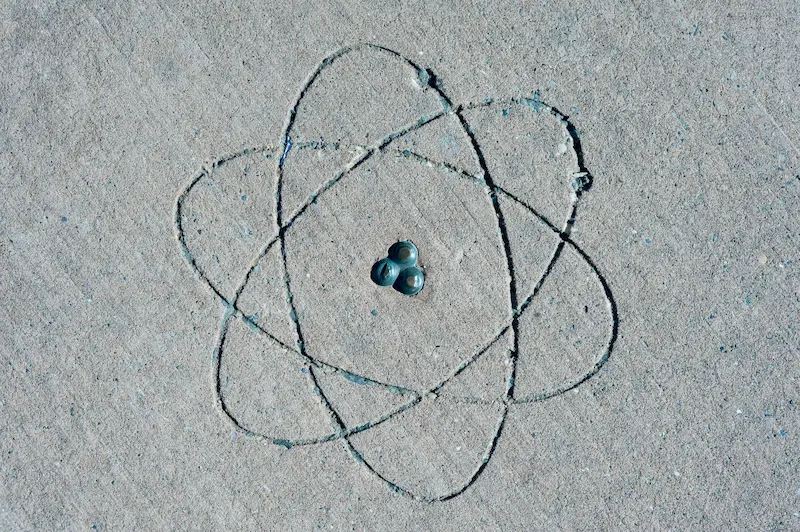
Pym Particles also break an important rule of quantum physics. Nearly every diagram of an atom shows a cluster of protons and neutrons (nucleus) with electrons orbiting the nucleus. While electrons actually exist as clouds surrounding the nucleus, this space keeps everything in the universe from collapsing in on itself. In 1925, physicist Wolfgang Pauli developed the Pauli Exclusion Principle, which states that no two electrons can be in the same quantum state. Although two electrons can share the same orbital, they must move in opposite directions. Pym Particles are supposed to shrink the space between electrons and the nucleus, but shrinking this space would force more than two electrons to share the same orbital, meaning that they couldn’t move in opposite directions. According to our current understanding of quantum mechanics, this simply isn’t possible.
Why Shrinking Isn’t Possible
Atoms are held together by electromagnetic forces, and most of an atom’s volume comes from the space that electrons occupy. Compressing these electrons would violate the rules of quantum mechanics. While scientists can’t shrink an object while keeping it intact, they can make incredibly small structures through nanotechnology. Instead of making existing objects smaller, scientists design and manufacture structures at microscopic scales. Nanotechnology has led to advances in targeted drug delivery, faster computer chips, and more durable materials.
Superhero Science Inspires Real Discovery
Ant-Man’s shrinking technology makes for exciting entertainment, but this technology isn’t possible based on our current understanding of physics. The Square-Cube Law and the Pauli Exclusion Principle both describe fundamental rules that govern how matter behaves. Although Pym Particles aren’t possible, advances in nanotechnology are allowing scientists to create materials that are much smaller than an ant. Even so, exploring fictional technology helps students ask meaningful scientific questions about atoms and forces, helping them better understand quantum mechanics.
Read more deep dives from STEM to Stern at the links below.




STEM Education Works is dedicated to providing cost-effective and user-friendly access to top-notch STEM curricula and technologies, driven by our mission to transform students’ lives. Learn more about what we do through our socials, Facebook, Twitter, Youtube, LinkedIn, Instagram, and TikTok.