

Bessie Coleman
September 22, 2026
Time Travel Trouble: Could You Break the Universe Like Loki?
September 22, 2026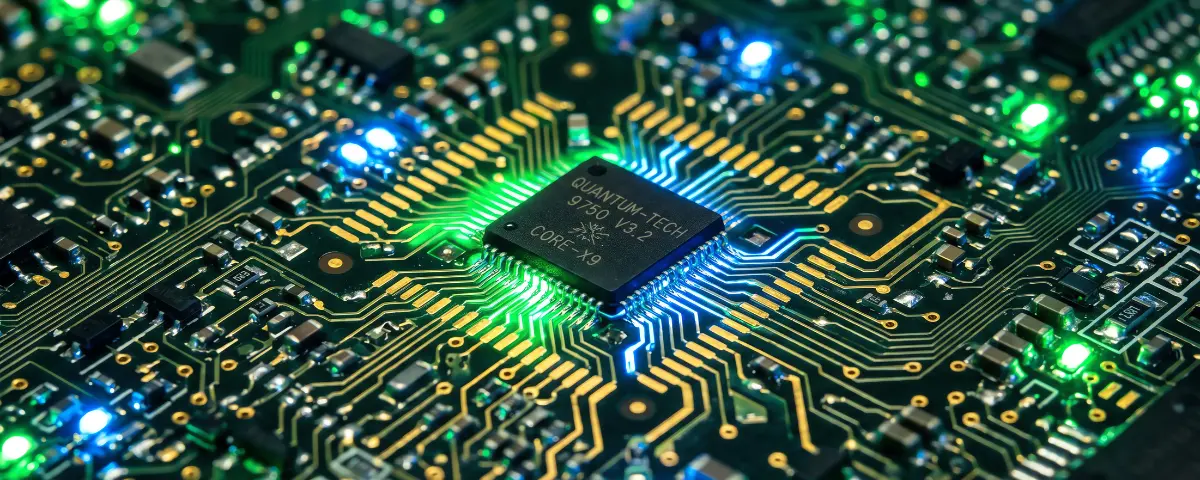
Building faster computers is a top priority for many tech companies, like Google, Microsoft, and IBM. The future of computing could be quantum computer chips, which are exponentially faster than traditional computer chips when it comes to certain computing challenges. If you’re a fan of science fiction, you may have heard that parallel universes are associated with quantum computers, and some scientists theorize that using a quantum computer means that you are interacting with a parallel universe.
How Do Quantum Computers Work?

Traditional computers read information in the form of binary bits, meaning that every value is either 1 or 0, true or false. On the other hand, quantum computers read information using quantum bits (qubits), which exist in a superposition of states, meaning that they can exist somewhere between 1 and 0. To simplify this idea, imagine you have a piece of red candy that could either be strawberry or watermelon flavored. Before you taste it, both options are possible. The candy is in an indeterminate state where it is both strawberry and watermelon flavored at the same time. But once you eat the candy, you know for sure what flavor it is. Quantum computers are incredibly skilled at estimating if something is in one state or another, but just before measurement, the object technically is in two states at once or between states. Quantum computers make estimates for complex calculations, and researchers are constantly working to improve their accuracy. Quantum computers take advantage of these indeterminate states to solve complex problems that would take a traditional computer thousands of years to solve in mere minutes.
What Could Quantum Computers Help Us Solve?

Normal computers solve problems one step at a time, but quantum computers can run multiple possibilities at once to determine the best outcome faster, which could revolutionize a number of STEM fields. For the pharmaceutical industry, quantum computers can accurately simulate how specific molecules will react, which could help researchers develop new drugs and medical treatments faster. In fields like cybersecurity, quantum computers could enable more sophisticated tools to keep users and their information safe from online threats. For engineers designing autonomous vehicles, quantum computers can calculate the best course of action in millions of scenarios to make these vehicles safer and more efficient.
Could Other Outcomes Exist in Parallel Universes?
Quantum mechanics relies on the concept of probabilities. Quantum computers are very skilled at identifying the probability that a bit is in one state or another, but since qubits can exist in an indeterminate state, they are technically in two states at once. The most famous example of this idea is Schrödinger’s Cat, a thought experiment where a cat is trapped in a box and, until the box is opened, the cat is technically both alive and dead. When you finally open the box, there is a certain probability that the cat will be dead and a certain probability that it will be alive. This is similar to the candy idea from before. If you taste the candy and it’s watermelon flavored, in a parallel universe, a copy of you is performing the same experiment, but the candy is strawberry flavored. While scientists have not confirmed that parallel universes exist nor that quantum computers interact with them, this idea helps explain the alternate possibilities of quantum mechanics. This doesn’t mean that parallel universes are completely out of the question since quantum mechanics is still an emerging field. Many questions about quantum mechanics and quantum computing are still unanswered, which means the field will need curious STEM innovators in the future.
Exploring the Possibilities of Quantum Physics
Quantum computers are already changing how scientists think about computing and complex problem-solving. Multiple major tech companies are investing in quantum computing, and the industry is expected to grow to handle the demand for faster processing. While the connection between quantum mechanics and parallel universes is still theoretical, exploring the possibility helps us ask questions about how the universe works. Today’s students could become the scientists and engineers who advance the field of quantum computing and help answer some of the biggest mysteries in modern physics.
Read more deep dives from STEM to Stern at the links below.






STEM Education Works is dedicated to providing cost-effective and user-friendly access to top-notch STEM curricula and technologies, driven by our mission to transform students’ lives. Learn more about what we do through our socials, Facebook, Twitter, Youtube, LinkedIn, Instagram, and TikTok.