

Asteroid Mining and Space Resource Utilization
September 22, 2026
Quantum Computing and Parallel Universes
September 22, 2026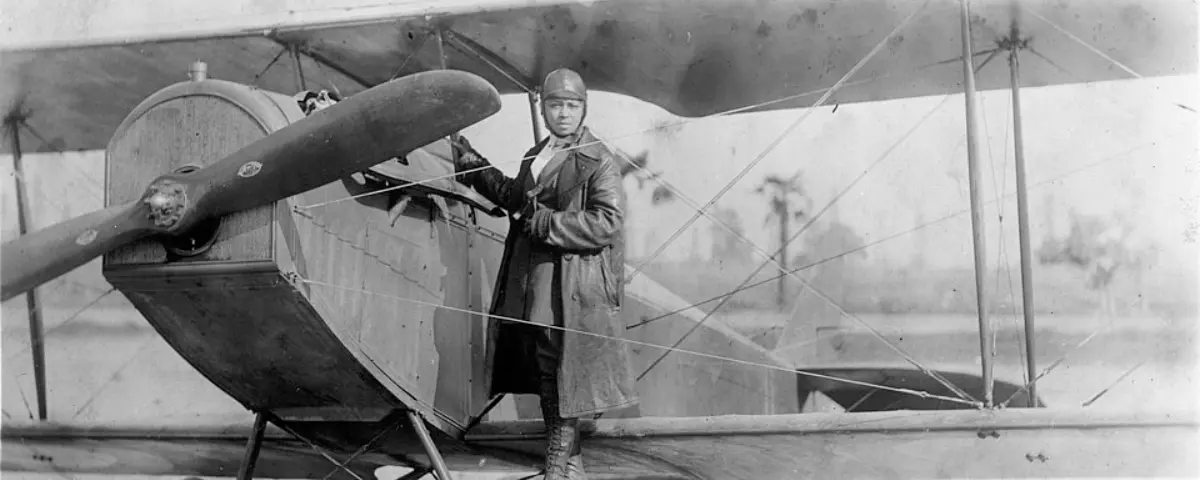
One of the greatest STEM trailblazers was an African-American woman who was determined to achieve her dream of flying. Bessie Coleman defied the odds to obtain a pilot’s license in the early 1920s and had a successful career as a stunt pilot before her untimely death in 1926. She was an aviation pioneer and the first African American woman to be a pilot.
Pursuing a Dream Against All Odds
Bessie Coleman was born in Texas in 1892. As an African-American living in the South, she faced many barriers and constant discrimination due to Jim Crow laws. During her adulthood, she moved to Chicago to live with her brother, who served in France during World War I. Hearing stories of female pilots in France inspired Coleman to learn to fly, but gender and racial discrimination prevented her from attending flight school in the United States. Rather than giving up on her dream, she decided to move to France to learn to fly and devoted herself to learning French in just one year. She earned her international pilot’s license from the Caudron Brothers School of Aviation in 1921.
Taking Aviation to New Heights
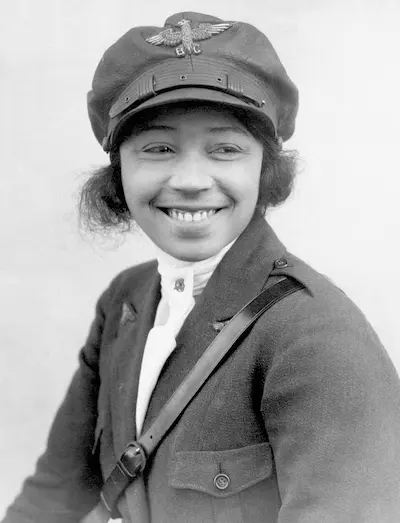
Upon her return to the U.S., she became a stunt pilot because women weren’t allowed to be commercial pilots at that time. She traveled across the country performing aerial stunts, like loop the loops, barrel rolls, and figure 8’s. African American newspapers published stories of her amazing feats, giving her the nickname “Queen Bess, Daredevil Aviatrix”. She was proud of her heritage and defied racism, refusing to fly in shows that only white people could attend. In 1926, she went on a test flight with another pilot, and sadly, the plane suddenly nosedived, dropping Coleman to her death.
Inspiring the Next Generation
While she toured the country, Coleman visited schools, encouraging African-American children to pursue a career in aviation. Her ultimate goal was to create a flying school for African Americans but was unable to achieve this goal during her life. She is still an inspiration to many as a pioneer in aviation. Her accomplishments are less well known than other aviation pioneers, like Amelia Earhart even though Coleman earned her pilot’s license two years before Earhart. Her story continues to inspire, and Mae Jemison, the first African American woman to go to space, brought her picture to space. Sharing the stories of diverse STEM pioneers can help students see themselves in STEM fields.
Leaving a Lasting Legacy in STEM
Bessie Coleman’s story demonstrates the power of perseverance. She was able to overcome barriers as a woman of color in the 1920s. Her achievements and commitment to encouraging others inspired generations of pilots. Learning about Coleman can encourage students to pursue their interests, overcome challenges, and become the next generation of innovators.
Read more deep dives from STEM to Stern at the links below.




STEM Education Works is dedicated to providing cost-effective and user-friendly access to top-notch STEM curricula and technologies, driven by our mission to transform students’ lives. Learn more about what we do through our socials, Facebook, Twitter, Youtube, LinkedIn, Instagram, and TikTok.