

What’s the best trilogy?
May 6, 2026
Are centaurs insects since they have six limbs?
May 6, 2026
STEMgineer’s Guide to Problem Solving Workbooks
How is STEM defined, and where does art fit? STEM stands for science, technology, engineering, and math. These concepts are important for students to learn because they require skills used in many careers. Some educators argue that this definition should include art as well, forming the acronym STEAM, while others assert that art should be separate from STEM.
How Art Connects to STEM Fields
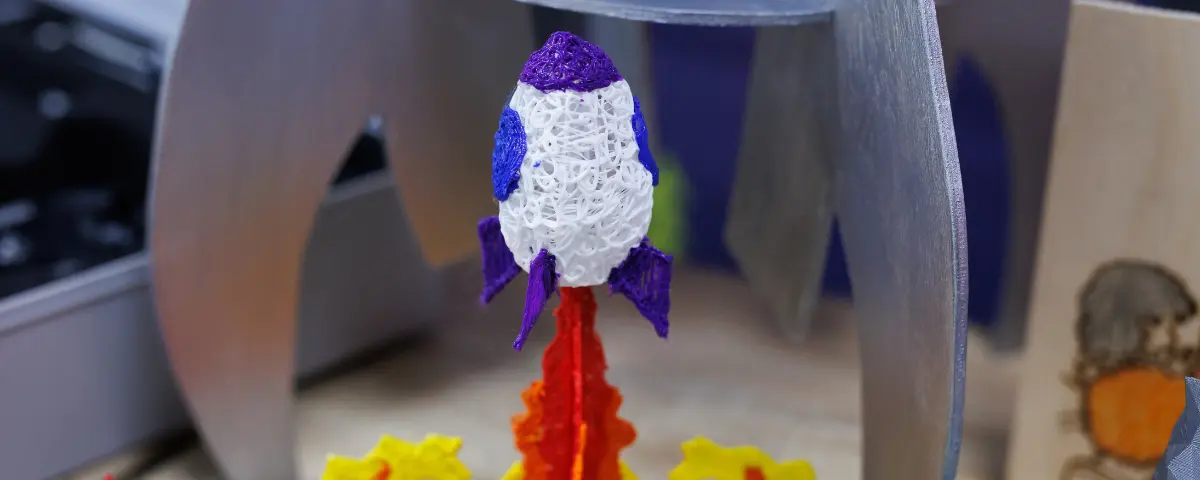
Art and STEM are not as different as many people believe. Both rely on creative thinking, which drives innovation. This creativity helps students think beyond one solution and explore new ideas.
Design plays a key role in STEM:
- Engineers sketch and prototype before building
- Programmers design user experiences, not only code
- Scientists test ideas through trial and revision
Take mobile apps as an example. Strong visuals and intuitive icons help users understand complex tools in seconds. That clarity comes from creative design thinking, not technical skill alone.
3D design and 3D printing are the ultimate bridge between art and STEM. Students use their creativity to design 3D models and then apply engineering and physics to produce stable objects.
Real-World Applications of STEAM
STEAM doesn’t exist just in the classroom. Artists have to use math to draw, design, and sculpt effectively. Artists also need to understand how geometry and proportions function to create realistic art. Similarly, people working in theatre and entertainment need to understand physics to build impressive sets and produce special effects.
STEM doesn’t stop there. Your favorite video games are the result of both STEM and art. Computer science is responsible for the code that keeps the game running, but artists design the characters and environments.
How Art Influences STEM Thinking
We often view STEM thinking as completely separated from art thinking. While STEM focuses on precision and practical design, both STEM and art require students to think creatively and continually improve their work through new iterations. STEM isn’t always about correct answers. It’s about how you approach problems. You need curiosity, experimentation, and a willingness to try, fail, and adjust. Students test ideas, make changes, and refine their work, regardless of whether it’s a drawing or a 3D printed design.
STEM and Art Work Together

Art will always have a role in STEM. While art is not the focus, it still has a role in how technology looks and functions. Many artists use technology created by people in STEM fields and vice versa. STEM and art support each other through shared skills such as creativity, problem-solving, and iteration. STEM includes art and artistic thinking without including “A” in the acronym.
Read more deep dives from STEM to Stern at the links below.


STEM Education Works is dedicated to providing cost-effective and user-friendly access to top-notch STEM curricula and technologies, driven by our mission to transform students’ lives. Learn more about what we do through our socials, Facebook, Twitter, Youtube, LinkedIn, Instagram, and TikTok.